
The Great Smog of London, 1952 – How Air Pollution Changed Public Health Policy
On the morning of 5 December 1952, London woke to a still, cold day. By nightfall the city had vanished. A dense, yellow-grey fog rolled in and settled, clinging to the streets, the houses, and the people. It would not lift for five days. By then, thousands were dead.
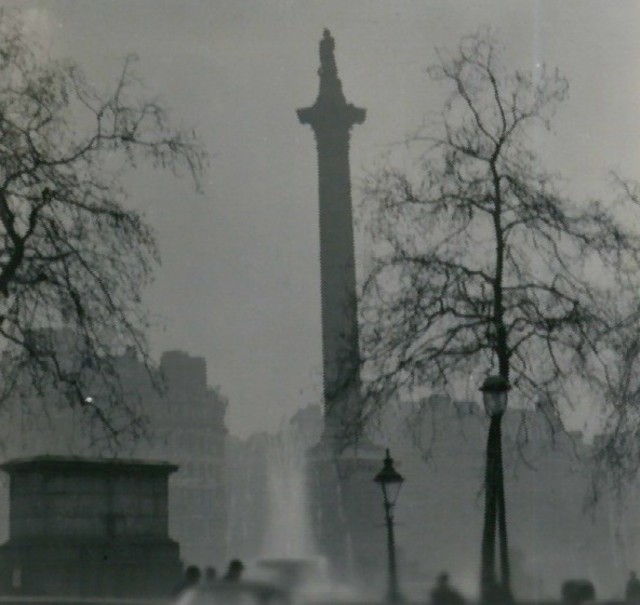
Iris Humphries was twenty-one and living in the capital. “Your skirt hems would be black,” she said. “You could feel the grit in the air. It was choking and dreadful.” Nine-year-old Brian Bone let his dog out into the garden and saw it disappear almost instantly. “You couldn’t see your feet.” He suffered lung problems for the rest of his life and never doubted the cause.
In East London, schoolgirl Rosemary Merritt watched her father come home struggling to breathe. He had chronic bronchitis and was already unwell. “He was blue in the face,” she remembered. Her mother ran to fetch the doctor. By the time she came back, neighbours were waiting to tell her he was gone.
London before the fog
Seven years after the war, the city was still rebuilding. Bomb sites scarred whole districts. Most homes were heated by open coal fires. Gas and electricity were costly, and the cheapest fuel was “nutty slack”, which was sulphur-rich and smoky. Factories, railways and buses burned coal in vast quantities. Diesel buses were replacing trams, adding their own fumes to the air.
London sat low in the Thames basin, where weather could trap pollution close to the ground. Temperature inversions, when a layer of warmer air forms above cold air, acted like a lid. Thick “pea-soupers” were common. They slowed traffic, blackened handkerchiefs and stained clothes, but they were seen as an inconvenience, not a danger.
When the weather turned
On 4 December, a high-pressure system settled over southern England. Overnight, the ground cooled quickly while the air above stayed warmer. The inversion formed. With no wind, everything produced in the city’s chimneys, furnaces, and exhaust pipes stayed there.
By Friday morning, a light fog lay over the streets. People lit their fires, factories began work, buses and trains ran as normal. The smoke and fumes thickened the air. By Saturday, visibility was so poor that buses crawled behind conductors waving torches. Cars were abandoned by the roadside. The fog seeped indoors – into shops, cinemas and hospital wards.
In the hospitals
Within a day, hospitals began to fill. The fog carried sulphur dioxide, fine smoke particles and sulphuric acid droplets that inflamed the airways. Carbon monoxide reduced the blood’s ability to carry oxygen.
At the Royal London Hospital, nurses found soot on the inside of windowsills. Patients arrived cyanosed, coughing thick yellow or green sputum. Some could only speak in short bursts between breaths. Others became confused and restless as their oxygen levels fell.
At Guy’s Hospital, patients with chronic lung disease arrived gasping for breath, feverish, and coughing up thick, discoloured sputum. Many had dangerously low oxygen levels. Chest X-rays sometimes showed diffuse or patchy opacities, which doctors recognised as either infection or, in some cases, pulmonary oedema on top of chronic lung disease. Many stayed in hospital for weeks, propped up in bed and breathing warm, moist air from a mask. Oxygen helped, but recovery was slow.
Beyond the ward doors, London inched forward. Ambulances crawled, their drivers hunched over the wheel, following a man on foot with a torch held low to find the kerb. Families who could not wait waved down taxis. They arrived at casualty with a patient slumped in the back, wrapped in a blanket against the wet cold. The NHS was only four years old. Every bed was taken, supplies were short, and staff worked until they dropped because there was nobody to hand over to.
Life in the fog
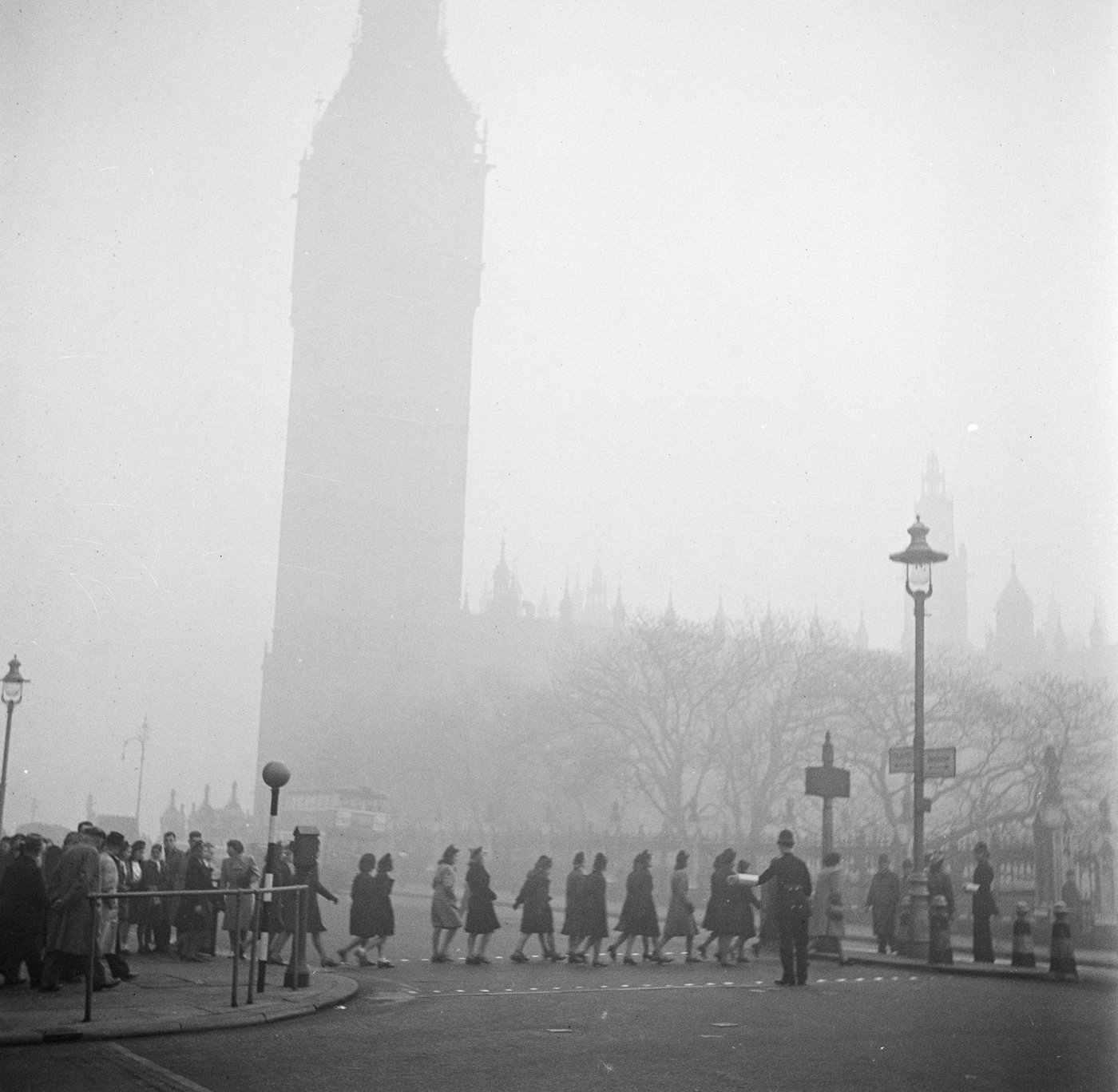
Theatres closed because the audience could not get there. Those who tried found the fog waiting for them inside. It clung to coats, curled around the seats, and hung in the air above the stage. Trains stopped or turned back before reaching the city. Barges and ferries stayed moored along the Thames. By midday, in some streets, the other side of the road had vanished.
Funerals were postponed because hearses could not find their way. At Smithfield market, animals died in their pens before they could be sold. In the streets, people walked into lampposts, into each other, even into the path of moving vehicles. Some lost their bearings and ended up at the water’s edge. A few fell in.
Counting the dead
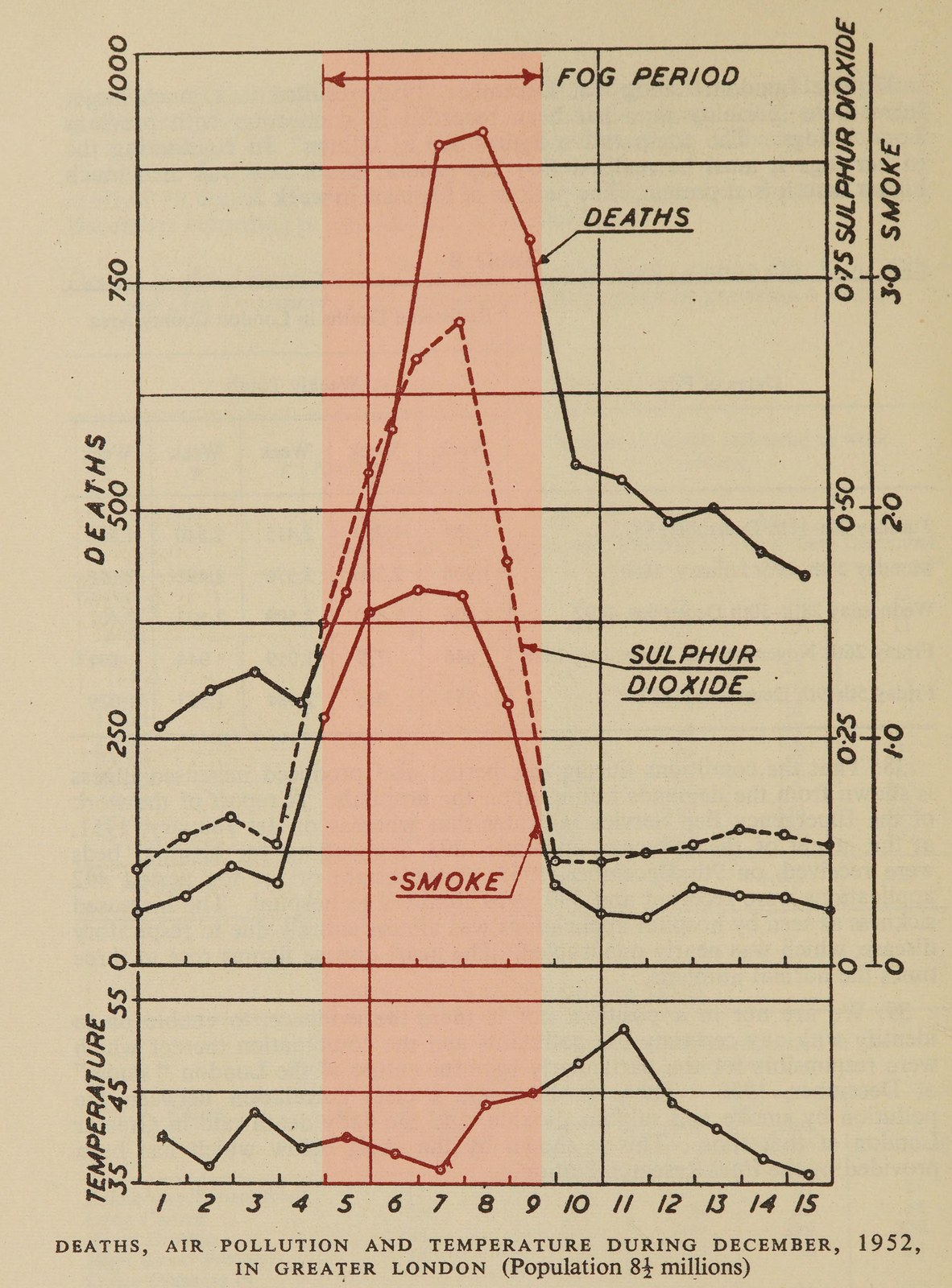
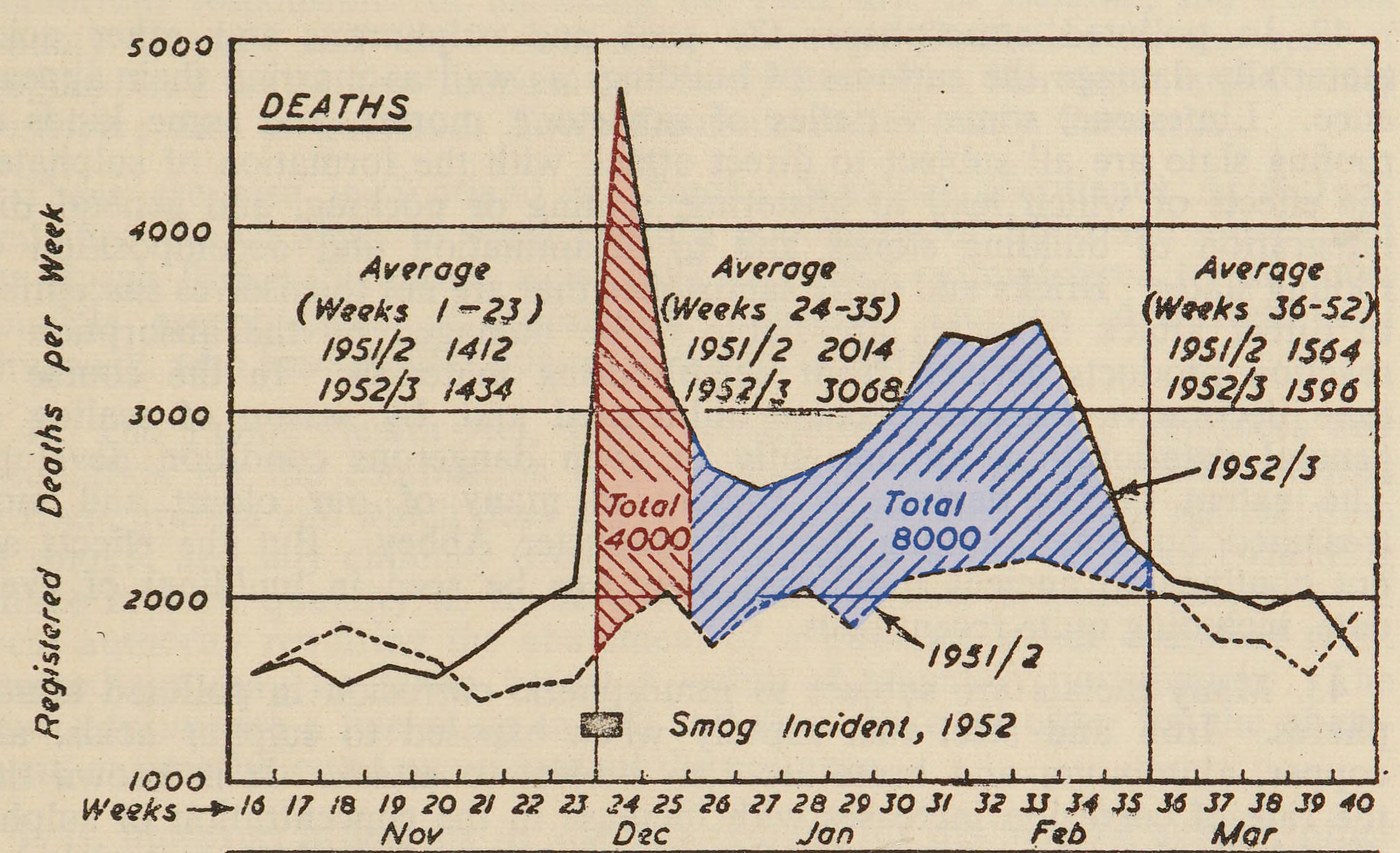
When the fog lifted on 9 December, the Registrar General’s office gave an initial estimate of around 4,000 deaths. In the following weeks, the picture grew darker. Public health officers compared weekly death registrations with the same period in previous years and saw an immediate, steep rise that lasted well beyond the fog itself.
In hospitals and GP surgeries, the link was obvious. People had died from acute worsening of chronic bronchitis, emphysema, asthma, and heart disease. Others, younger and previously well, had succumbed to severe respiratory infections triggered by the toxic air. The best modern estimate is around 12,000 deaths and another 100,000 seriously ill.
The investigation
The Ministry of Health ordered a detailed inquiry. Medical Officers of Health across the capital were told to record deaths and admissions in their districts. The pattern was clear. Numbers began to climb within a day of the smog arriving, reached their peak over the weekend of 6–7 December, and eased as the weather changed.
Influenza was considered and dismissed. Laboratory reports from the period found no sign of an outbreak on that scale. The investigators’ conclusion was stark: the combination of smoke and sulphur dioxide from coal fires, held in place by a prolonged temperature inversion, had been lethal.
When the findings were presented to Parliament early in 1953, they left little room for argument. Air quality controls were not protecting the public, and without change, another disaster was possible.
Pressure for reform built quickly. The Clean Air Act of 1956 banned the worst of the coal smoke from city chimneys. It created smoke-control zones, pushed households towards smokeless fuels, and moved power stations out of town. The 1968 Act went further, tightening the rules for factories and ordering taller chimneys so their fumes spread out before they came back down.
Within a decade, the heavy black smogs had gone. London’s air was far from clean, but the days when the city could be paralysed and thousands killed in a single week were over.
Legacy
The smog of 1952 could be seen and smelled. Today’s pollution is much less apparent, but it still affects health and really can take lives. One tragic example of this occurred in 2013, when nine-year-old Ella Kissi-Debrah died after repeated asthma attacks. She lived near the South Circular Road in Lewisham, where traffic levels kept nitrogen dioxide and fine particle pollution above the legal limit. A coroner later reported that years of breathing polluted air had contributed to her death.
The Great Smog changed public health policy in Britain. It proved that the air people breathe can turn deadly in days, and that when the signs are there, doing nothing will cost lives.
Comments
0 published comments
No comments yet. Be the first to share your thoughts.